IFC → STEP AP242 · PhD Research

From BIM to
Fabrication.

No Data Lost. // IFC → STEP AP242 · With PMI

OffBIM converts IFC building models into manufacturing-ready STEP AP242 files — preserving hole geometry, tolerances, and assembly data that every other tool silently discards.

Developed by Rita Baltasar as part of PhD research at UWE Bristol, OffBIM addresses a validated gap in BIM-to-manufacturing interoperability. Unlike generic IFC to STEP converters, OffBIM embeds manufacturing information requirements — PMI tolerances, hole geometry annotation, and assembly data — directly into STEP AP242 output. Validated by NIST STEP File Analyzer v5.41 with zero errors. The only web-based IFC to STEP AP242 tool purpose-built for DfMA fabrication handoff.

.IFC IFC 4.x / 2x3 STEP AP242 ISO 10303-242 + PMI + Holes IfcOpeningElement CYLINDRICAL_SURFACE ✓ NIST Validated AP242 Ed.1 2014
See It In Action

From BIM to Fabrication-Ready STEP

Four capabilities. One pipeline. Zero manual translation.

AP242 Hole Feature Annotation

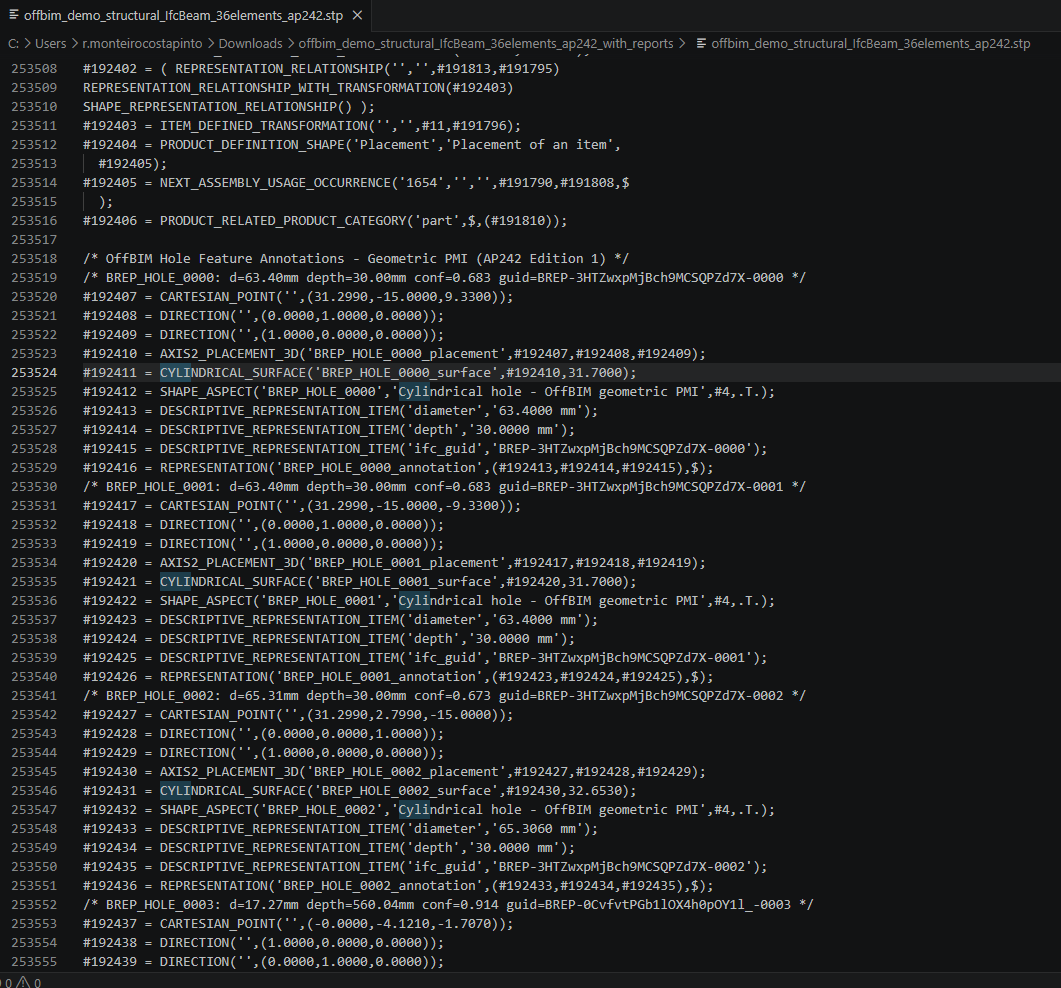
OffBIM detects cylindrical openings from IFC geometry and exports them as CYLINDRICAL_SURFACE entities in a conformant AP242 STEP file — ready for CNC and fabrication systems.

  • Automatic hole detection from IfcOpeningElement and B-rep geometry
  • CYLINDRICAL_SURFACE per hole in AP242 DATA section
  • Batch export across 50 elements per file

Geometric Tolerance Export

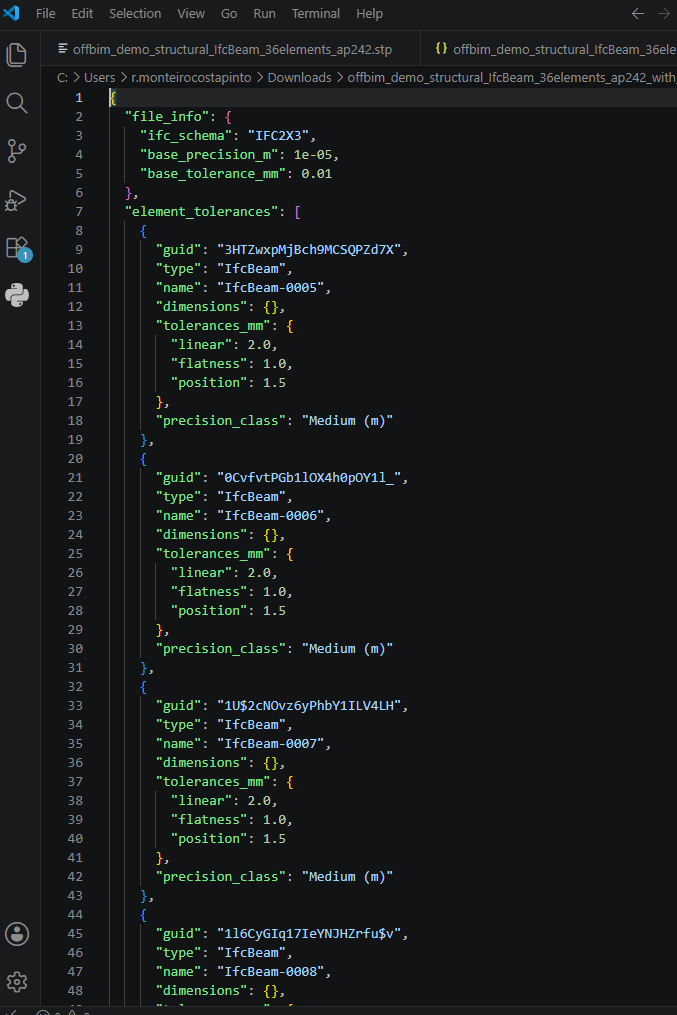
Dimensional tolerances defined in BIM are preserved and exported as companion JSON metadata alongside the STEP file.

  • Tolerance data from IFC property sets
  • JSON companion file per exported batch
  • Compatible with assembly reports

Assembly Structure Export

Multi-part assemblies exported with hierarchical relationships intact — NEXT_ASSEMBLY_USAGE_OCCURRENCE entities preserve parent-child structure.

  • Full assembly tree preserved in STEP
  • Placement transformations per component
  • Compatible with CAM and fabrication tools

IFC-to-STEP Entity Mapping

OffBIM maps IFC semantic entities to their STEP AP242 equivalents without information loss.

  • 12 IFC entity types supported
  • Geometry and semantic metadata preserved
  • Validated against NIST STEP Analyzer

What OffBIM
does for you

01 /

Hole Feature Extraction & PMI

Extracts IFC opening elements and reconstructs them as analytically exact CYLINDRICAL_SURFACE entities in STEP AP242 — the geometry IfcConvert silently destroys.

ISO 10303-242 · PMI
02 /

Manufacturing Reports

Generates tolerance reports, assembly relationship reports, and BIM-to-manufacturing mapping files — the Manufacturing Information Requirements your project is missing.

MIR · JSON · CSV
03 /

Individual Element Export

Select any element from your model and export it individually as STP, STL, OBJ, or AP242. Because manufacturing happens one component at a time — not the whole building.

STP · STL · OBJ · AP242
04 /

Geometry Analysis & BOM

Analyses geometry complexity, extracts Bill of Materials, and classifies elements by manufacturing readiness — giving fabricators the data they need before a single cut is made.

BOM · Complexity · DXF

Four-stage
conversion engine

STAGE 0
IFC Semantic
Extraction
Holes manifest
+ GUID mapping
STAGE 1
IFC → Geometry
Conversion
Standards-based
conversion
STAGE 2
AP214 → AP242
Post-Processor
Schema upgrade
+ hole injection
STAGE 3
NIST SFA
Verification
AP242 Ed.1
compliance check

Built on peer-reviewed
research. STEP output verified
using the NIST STEP File Analyzer.

OffBIM is the output of a PhD research programme validated by 27 construction industry professionals across six dimensions including relevance, effectiveness, and intention to adopt.

Validators
27+
Performance
480×
Standard
AP242
Institution
Research
Case Studies

From IFC model to
manufacturing output

Each case study documents a real problem in construction manufacturing workflows, the technical solution implemented in OffBIM, and the measurable outcome — validated against live project data from a major UK nuclear infrastructure programme.
CS·01
IFC → AP242 · Structural Steel
NIST-validated IFC-to-STEP AP242 translation with full PMI annotation
Structural steel · Major UK nuclear infrastructure programme · NIST STEP File Analyzer 5.41
Standard IFC-to-STEP conversion tools discard cylindrical hole geometry during export. OffBIM automates a three-stage detection pipeline — IfcOpeningElement semantic detection, B-rep face-clustering geometric detection, and proximity deduplication — reconstructing all hole types as CYLINDRICAL_SURFACE entities with full geometric PMI in the AP242 output.
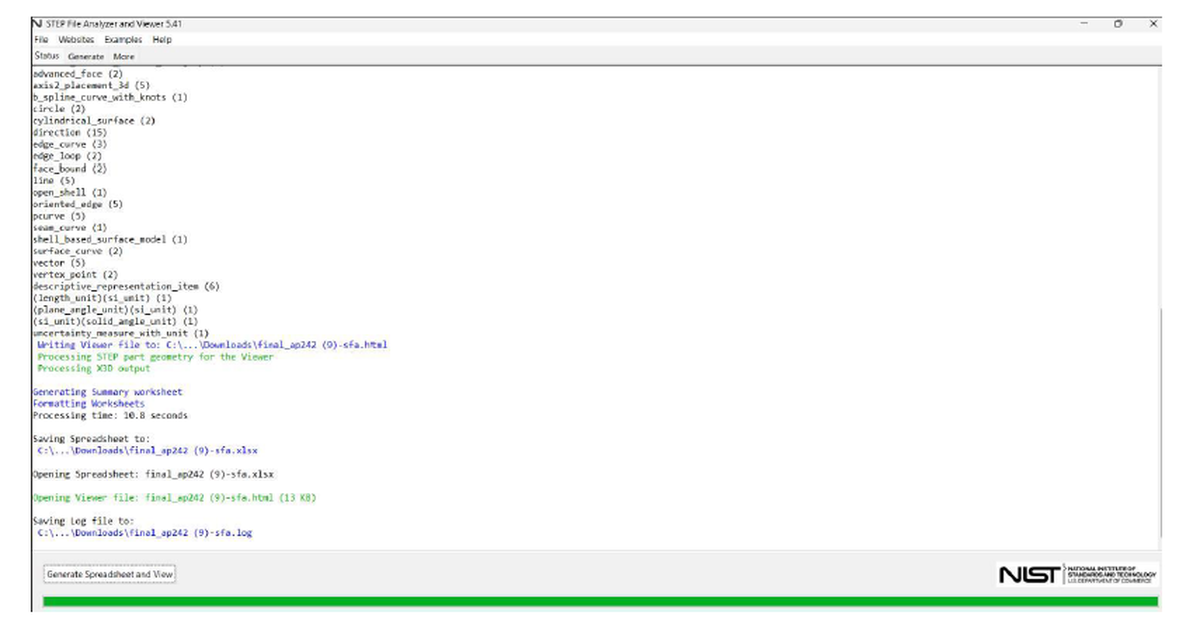
NIST STEP File Analyzer 5.41 — 0 errors reported
NIST STEP File Analyzer validation output showing zero errors
NIST STEP File Analyzer 5.41 — entity summary and validation log
Raw STEP AP242 file showing CYLINDRICAL_SURFACE PMI entities with GUID traceback
Raw STEP output — CYLINDRICAL_SURFACE entity with diameter, depth, confidence score and IFC GUID traceback
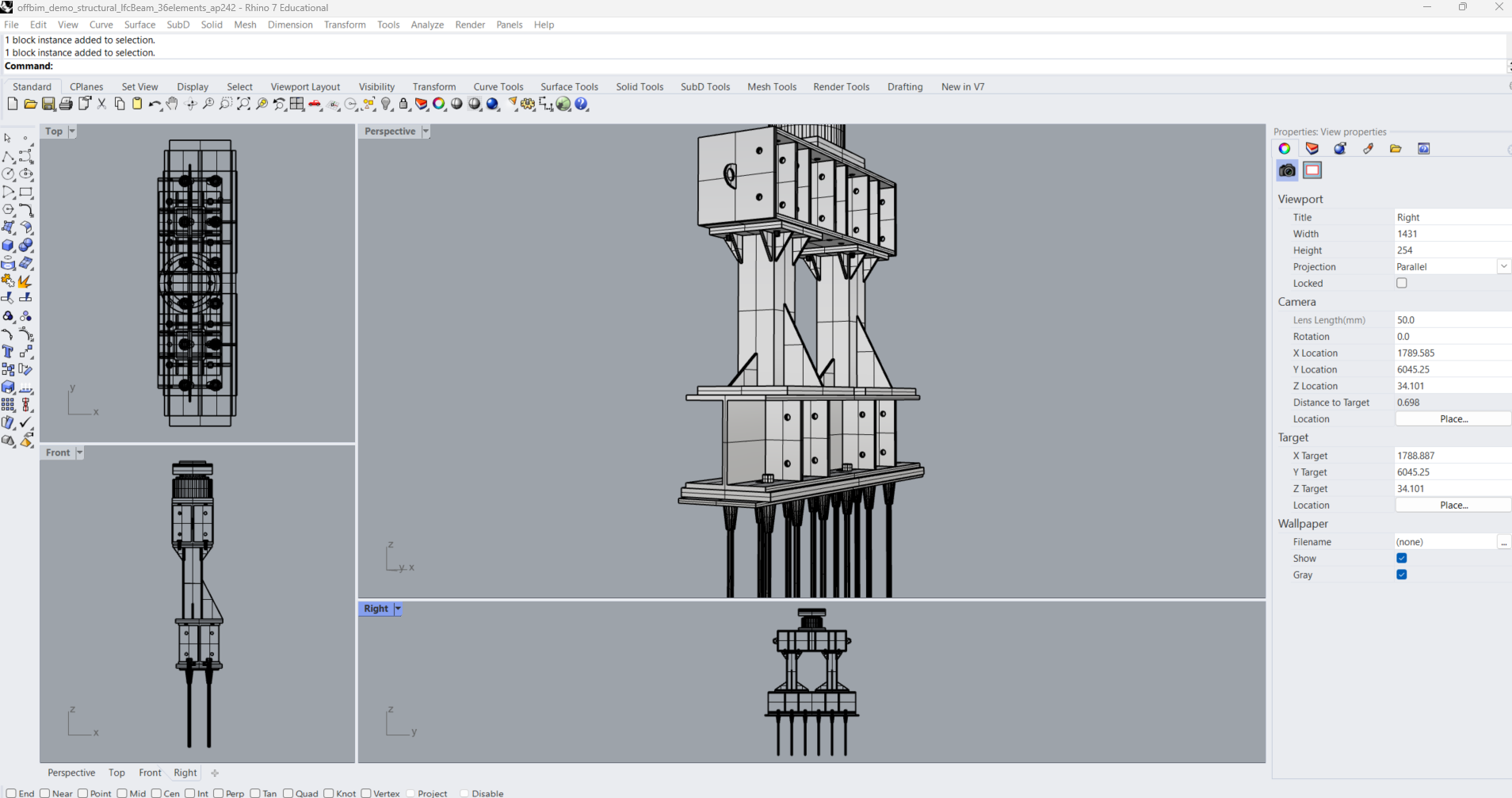
AP242 STEP file with holes rendered in Rhino 3D viewport
Translated AP242 geometry rendered in Rhino — hole features preserved through conversion
ISO 10303-242 CYLINDRICAL_SURFACE PMI IfcOpenShell
CS·02
Manufacturing Reports · Structural Steel
Batch-scoped assembly, mapping and tolerance reports generated directly from the IFC model
36-element IfcBeam batch · ISO 2768-1 · Full traceability to source IFC GUIDs
Once a STEP file leaves the BIM environment, three problems consistently surface on the fabrication side. OffBIM addresses each one directly.
Traceability is lost
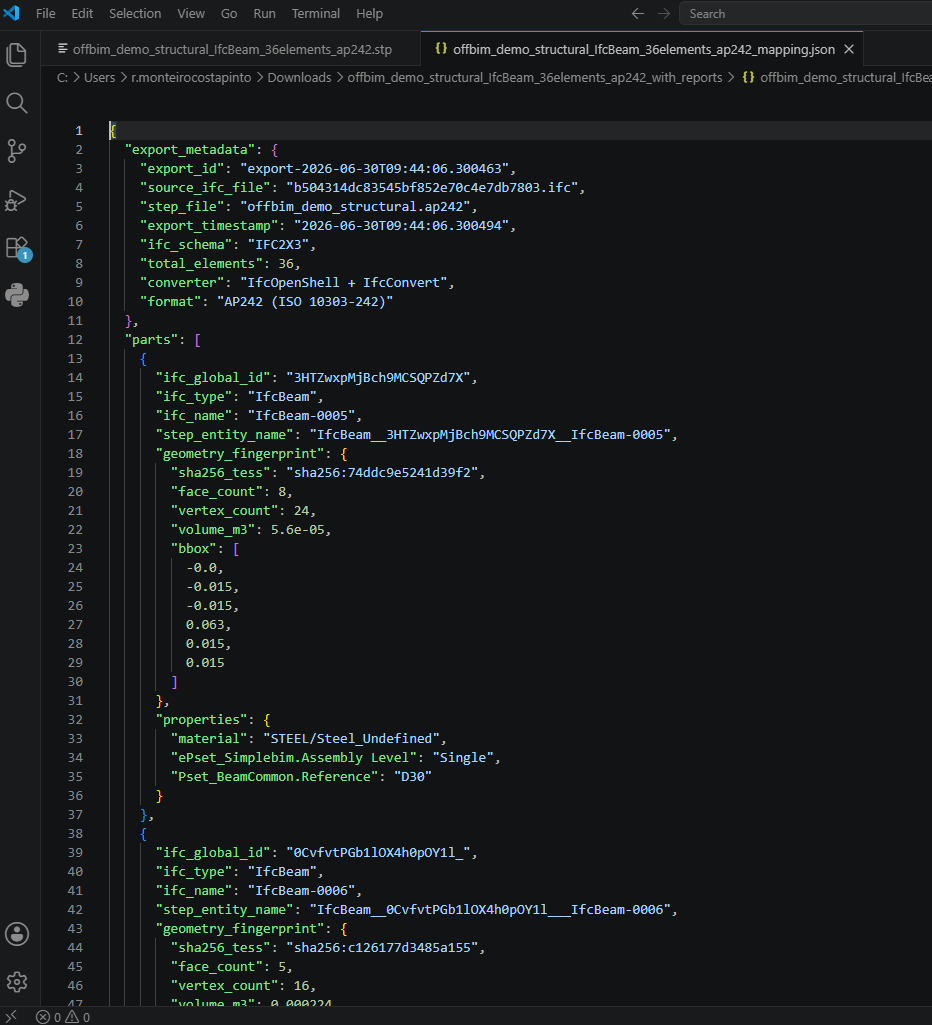
Once a part reaches the fabricator, there is usually no way back to the originating IFC element. The mapping report preserves a full GUID-level link between every manufactured part and its source IFC entity, with geometry fingerprint and material data attached.
Assemblies get lost
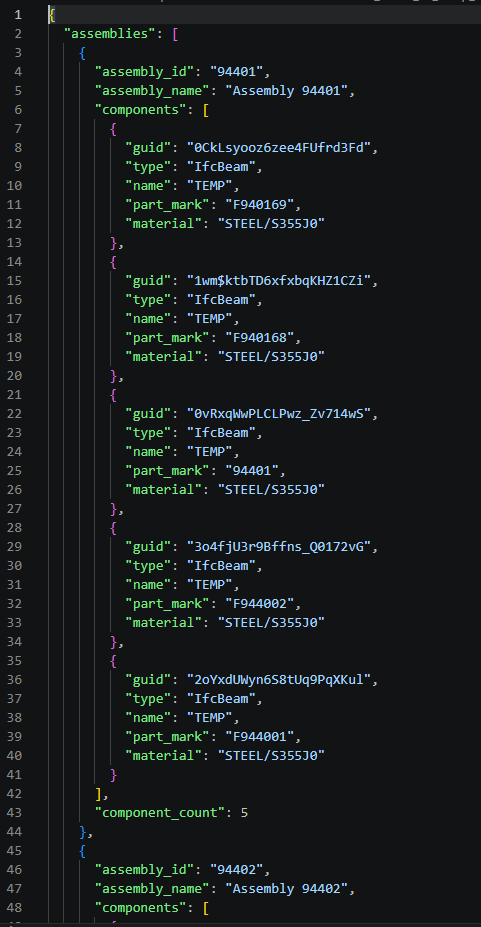
Loose components frequently arrive without a clear record of which assembly they belong to, forcing fabricators to reconstruct this manually from drawings. The assembly report groups components automatically, by assembly mark where present, with part mark and material grade carried through for every component.
Tolerances are assigned by hand
Manufacturing tolerance is typically a manual, judgement-based decision per element. The tolerance report automatically attributes tolerances based on BS EN ISO 2768-1, by element type, scoped correctly to the exported batch rather than the full model.
36 of 36 batch elements correctly scoped and reported
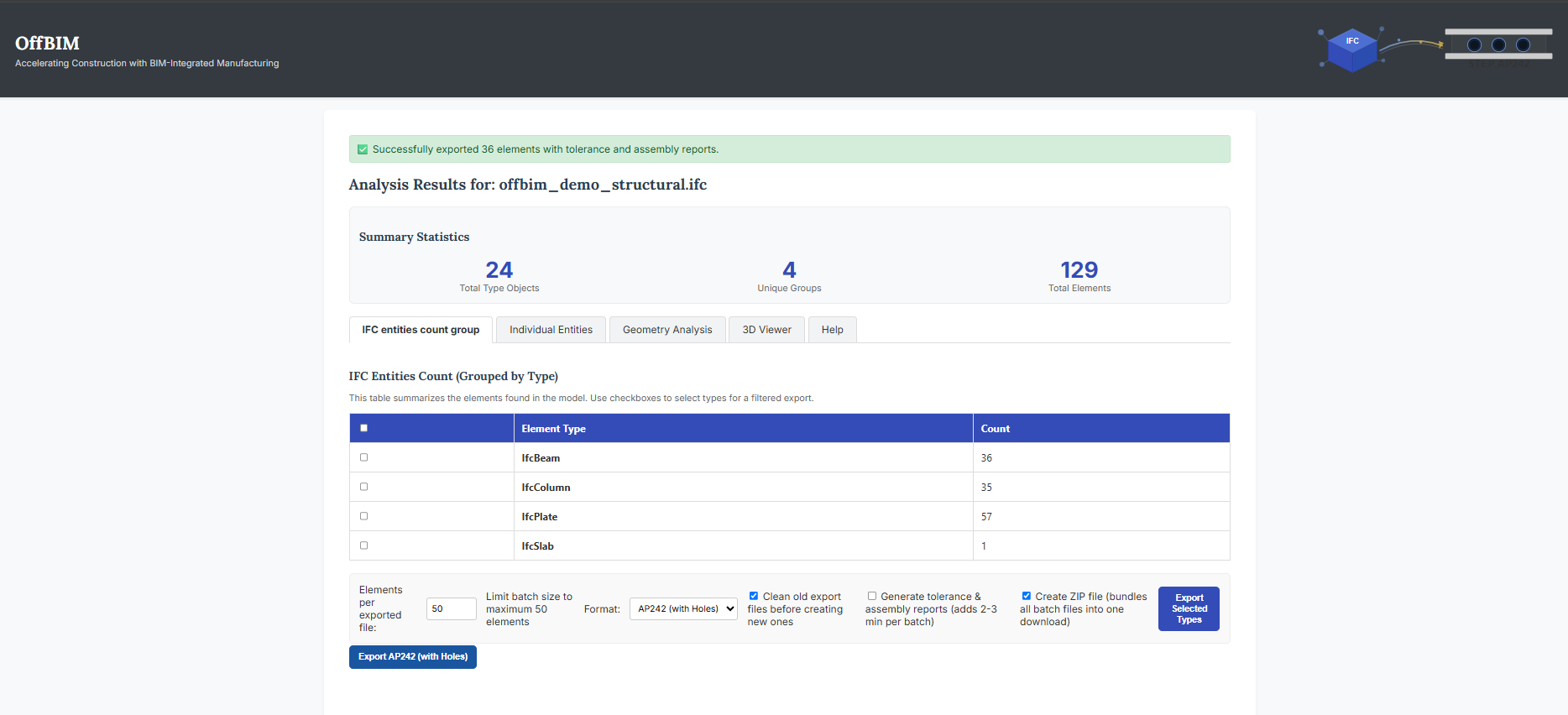
OffBIM export interface showing IFC entity counts and AP242 export with tolerance and assembly reports
OffBIM production interface — 36 elements exported with tolerance and assembly reports generated
Mapping report JSON showing IFC element traced to STEP entity with GUID and material data
Mapping report — IFC element traced to STEP entity
Assembly report JSON showing components grouped by assembly mark with material grade
Assembly report — components grouped by assembly mark
Tolerance report JSON showing automatic ISO 2768-1 tolerance attribution per element
Tolerance report — ISO 2768-1 automatically attributed
MIR Framework ISO 2768-1 Batch Export JSON Reports
CS·03
Industry Adoption · Steelwork Fabrication
Validated on live project files by structural steelwork fabricators
William Hare · Structural steelwork contractor

"One major issue I have experienced with IFC to STEP conversion in the past has been the amount of time required to complete the conversion process and obtain the resulting files. One of the key benefits I found with OffBIM was the speed of conversion and the overall ease of use. The interface is clean, intuitive, and straightforward to navigate, with clear labelling throughout, resulting in a smooth and user-friendly experience.

I also particularly appreciated the integrated BIM viewer. This is an excellent feature for carrying out pre-conversion checks, ensuring that the correct file(s) have been selected before conversion begins. Overall, it is an impressive piece of software that I can see myself making significant use of in the future."

— Adam Booth, BIM Engineer, William Hare
🔬
Phase 2 capabilities — releasing post-September 2026 following doctoral examination: extended hole type recognition, GD&T annotations, dimensional tolerance passports, and rebar fabrication export (BS8666 / BVBS).